How to Plan Your First 24 Hours in a New City
Some links in this post may be affiliate links, which means I may earn a small commission at no extra cost to you. I only share tools and experiences I personally use and love.
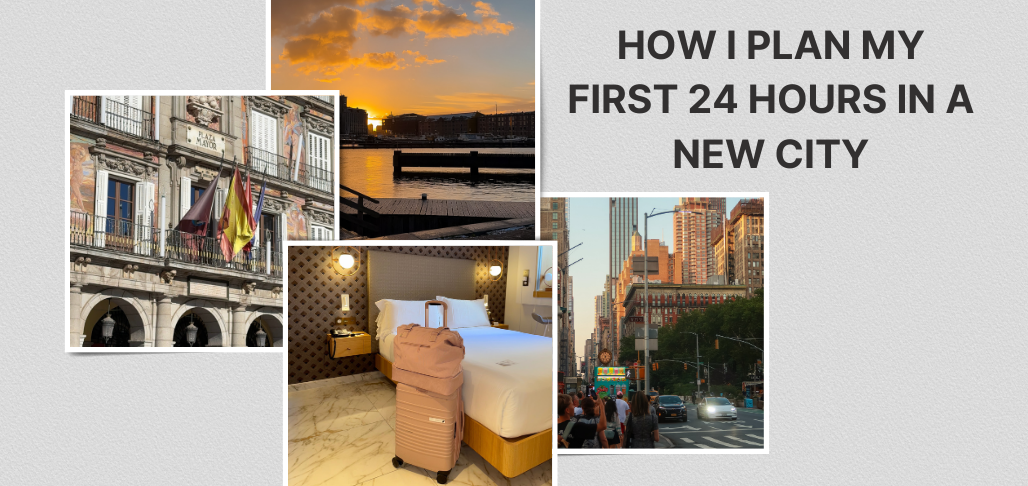
Landing in a new city sounds exciting—until it isn’t.Until you’re standing outside the airport with jet lag, a half-working phone, and the sudden realization that you have no idea what you’re doing. I’ve been there.
That very first day can either set the tone for your entire trip—or completely throw you off. Overplanning leads to burnout. Underplanning leads to anxiety. And when you’re traveling solo, that pressure hits even harder because everything falls on you.
Over the years, I’ve figured out a simple, realistic way to plan my first 24 hours in a new city so I feel oriented, safe, fed, and confident, without trying to do too much or forcing myself into an unrealistic itinerary.
This approach works whether you’re traveling solo, visiting a city for the first time, or just want arrival day to feel calm instead of chaotic.
What’s the first thing I do when I land?I treat arrival day as exactly what it is: a travel day. That means keeping things light and intentional.
When I travel internationally, especially to Europe, I usually land in the morning. After dropping my bags or checking into my hotel, I do not nap. I’ve learned the hard way that even a short nap can completely wreck my sleep schedule for the rest of the trip.
Instead, I start with two things: food and a walking-based activity.
What if my hotel room isn’t ready?This is actually one of the main reasons I plan arrival day this way.
If my room isn’t ready when I arrive, I drop my bags and head back out. No spiraling, no waiting around exhausted in a lobby. Having a loose plan gives the day direction even if check-in is delayed.
If early check-in is available and within budget, I’ll take it. Being able to shower, change clothes, and reset before heading back out is absolutely worth it. I just avoid getting into bed. A shower refreshes me without knocking me out.
If early check-in isn’t an option, I plan one light activity nearby, so I’m not wasting time or energy.
Why I love walking tours on day oneWalking tours are hands-down my favorite way to ease into a new city. They help me see major landmarks without pressure, understand how the city actually works, and pick up local tips you won’t find on Google. Most importantly, they make me feel less lost almost immediately.
Most free walking tours last about 1.5 to 2 hours, which is perfect for day one. I usually just Google “free walking tours + city name” and choose one based on what I want to see and what time aligns best with my arrival. For example, if you’re visiting Madrid, I recommend Free Walking Tours Madrid to get oriented and learn the city’s history without pressure. It’s structured enough to give the day direction, but relaxed enough that I’m not rushing or overwhelmed.
If free walking tours aren’t available for your arrival time, you can book guided tours through GetYourGuide.
It’s my go-to for walking tours, food tours, and small group experiences because everything is vetted, clearly reviewed, and easy to book last-minute.
You can browse the tours and experiences I personally book through GetYourGuide here: Explore My Favorite City Tours & Experiences
What if I can’t make a walking tour?Walking tours are my go-to, but they’re not always realistic.
If I can’t make one, I still go out, just with less structure. I’ll look up a self-guided walking tour (searching “free self-guided walking tour + city name” usually brings up great options), wander a neighborhood near my hotel, or sit at a café and people-watch while catching up on work or content.
Other low-effort arrival-day options I love:
Exploring a nearby park or waterfront
Visiting a food market or food hall
Taking a canal or river cruise
Wandering one neighborhood without a strict plan
These activities keep me moving and alert without overwhelming me.
In some destinations, people arrive very early, sometimes 2 or 3 in the morning. In those cases, look for experiences that happen early, like sunrise viewpoints, hot air balloon rides, or early-morning markets. If the timing aligns with when you get to the hotel, these experiences can actually help reset your internal clock instead of fighting it.
Do I rest or push through jet lag on day one?I usually push through it — but gently.
This isn’t about forcing productivity or packing in activities. It’s about staying awake long enough to reset your internal clock. I stay moving, get sunlight, eat something light, hydrate, and plan to go to bed around my normal bedtime.
But here’s the truth: sometimes your body just isn’t having it.
If I absolutely feel like I’m going to crash, I let myself rest. I’ll go back to the hotel, lie down, and sleep — without guilt. Many countries have later dinner times anyway, and sometimes that nap gives me just enough energy to grab a drink at a bar or lounge later.
Other times, I sleep straight through until morning, and honestly, that can be even better. I wake up refreshed and ready to explore instead of dragging jet lag into day two. The key is listening to your body, not forcing a rule just to prove a point.
If I feel myself crashing but don’t want to sleep yet, I’ll sit at a café, people-watch, or take a short walk near my hotel. Low effort still counts.
How much do I actually plan vs. leave open?Only one thing is non-negotiable on day one: one anchored activity.
Everything else lives on a list of options, not commitments. I save tightly planned itineraries for later in the trip, once I’m rested and more familiar with the city.
If jet lag hits harder than expected, I pivot. If I feel energized, I explore more. Having ideas written down without locking myself into them keeps the day stress-free and flexible in the best way, not rigid, not chaotic.
How do I avoid feeling overwhelmed in a new city?Preparation. Every time.
Before I even land, I do a lot of research, and it makes a huge difference. If you want the best experience in any destination, you need to understand how things work before you get there.
Transportation is a big one. Not every country or city uses Uber the same way the U.S. does. For example, Uber exists in Italy, but it’s not widely used. Apps like FREE NOW, AppTaxi, WeTaxi, and local taxi services are much more common. Spain, especially Madrid, Barcelona, and Mallorca, uses Uber, and FREE NOW is widely available across major cities.
In Denmark, Uber isn’t available at all. Instead, people rely on Bolt, Viggo, Dantaxi, and other local services. Knowing this ahead of time saves so much stress.
I also research whether a destination is more cash- or card-friendly. Japan, for example, is still very cash-heavy, especially for temples, small restaurants, and taxis. In contrast, I had no problem using cards almost everywhere in Italy or Madrid and didn’t need to carry cash at all.
Safety research is another must. Cities like London and Paris are incredible, but they also have well-known scams targeting tourists, especially on public transportation and in crowded areas. This is especially important if you’re booking an Airbnb; you don’t want to unknowingly stay in an area that makes you uncomfortable.
One thing I never skip is making sure I have data the moment I land. I use Airalo, an eSIM that lets me access data abroad without swapping SIM cards or paying expensive roaming fees.
Having Google Maps, Uber, and messaging available right away makes a huge difference, especially when you’re traveling solo.
You can get $3 off your first Airalo purchase using my referral code KHADIJ4810.
Things can still go wrong, because travel is travel, but preparation keeps panic low and confidence high. Every single time.
Arrival day isn’t about seeing everything. It’s about setting yourself up to enjoy the rest of the trip. When I treat day one gently, with structure, flexibility, and realistic expectations, day two always feels better. Every single time.
So there you have it, this is how I plan my first 24 hours in a new city.
This approach may not work for everyone, and that’s completely okay. Travel isn’t one-size-fits-all. The beauty of hearing other people’s experiences is that you get to take what resonates and leave the rest, shaping a travel style that actually works for you.
If you try any part of this arrival-day routine on your next trip, I’d love to hear how it goes. And if you’re still building confidence with solo travel, remember: feeling a little unsure at the beginning is normal, but preparation goes a long way.
Don’t forget to subscribe to my newsletter for more solo travel tips, realistic itineraries, and travel inspiration designed for busy schedules and limited PTO.
xoxo, KhadijaYou Might Also Like…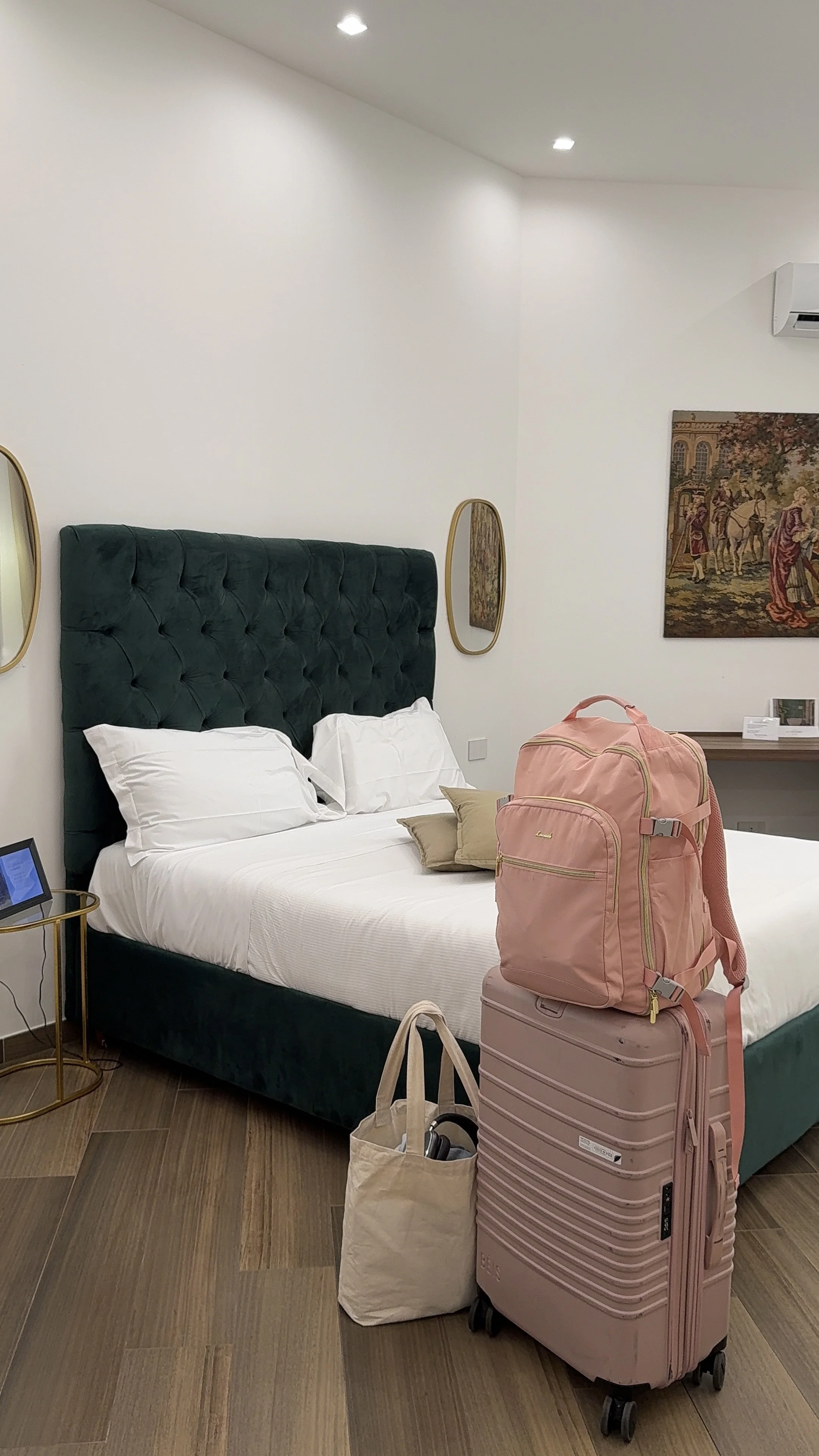



Some links in this post may be affiliate links, which means I may earn a small commission at no extra cost to you. I only share tools and experiences I personally use and love.
